
By Christiaan Davidson, Founder, Saguaro Ranch Luxury Assisted Living Care Team, Tucson, AZ
Reviewed for accuracy by the Saguaro Ranch Luxury Assisted Living care team.
Signs an Elderly Parent Can No Longer Live Alone
Quick Answer: An elderly parent may no longer be able to live safely alone if they experience frequent falls, medication errors, memory loss, poor hygiene, social isolation, wandering, difficulty managing daily tasks, or increasing confusion. Recognizing these warning signs early can help families provide the support needed to maintain safety and quality of life.
Key Takeaways for Families
- Falls, medication errors, memory loss, hygiene decline, social isolation, and wandering are among the most important warning signs to watch for.
- ADLs provide a clinical framework for assessing daily functioning. Difficulty with two or more warrants a conversation about support options.
- Family concern is valid and important information. When worry builds consistently over time, it’s worth acting on.
- Resistance from a parent is normal. Starting conversations early, before a crisis forces the issue, gives everyone more time and more options.
- In the right environment, assisted living is not a loss. It’s an invitation to a genuinely better chapter.
There’s something about Tucson that makes you want to believe everything is fine. The sky is wide and open. The pace of life feels unhurried. The desert has a way of making problems seem smaller than they are.
But the signs that a parent needs support don’t disappear against that backdrop. They just get quieter. At Saguaro Ranch Luxury Assisted Living, nestled at the foot of the Tortolita Mountains, we speak with Southern Arizona families every week who have been holding this particular worry for longer than they should have. This guide is meant to help you see clearly and move forward with confidence.
Why Living Alone Becomes More Difficult With Age
Aging changes things gradually. Physical stamina shifts. Balance becomes less reliable. Chronic conditions accumulate. The Sonoran Desert sun, which is one of the great gifts of life in Tucson, can also amplify the risks for seniors living alone, especially during summer months when heat exposure, dehydration, and reduced outdoor time all contribute to health risks.
The Arizona Department of Health Services, through its Bureau of Residential Facilities Licensing, licenses and oversees assisted living communities throughout Arizona to help support resident health, safety, and quality of care.1
The National Council on Aging notes that falls are one of the leading causes of injury and loss of independence among older adults, with those living alone facing particular danger because no one is nearby when an incident occurs.2 In Arizona’s heat, a fall with no one present carries additional urgent stakes.
15 Signs an Elderly Parent Can No Longer Live Alone
These warning signs don’t exist in isolation. They build on each other. If you’re recognizing several consistently over time, that pattern is worth taking seriously.
Frequent Falls or Balance Problems
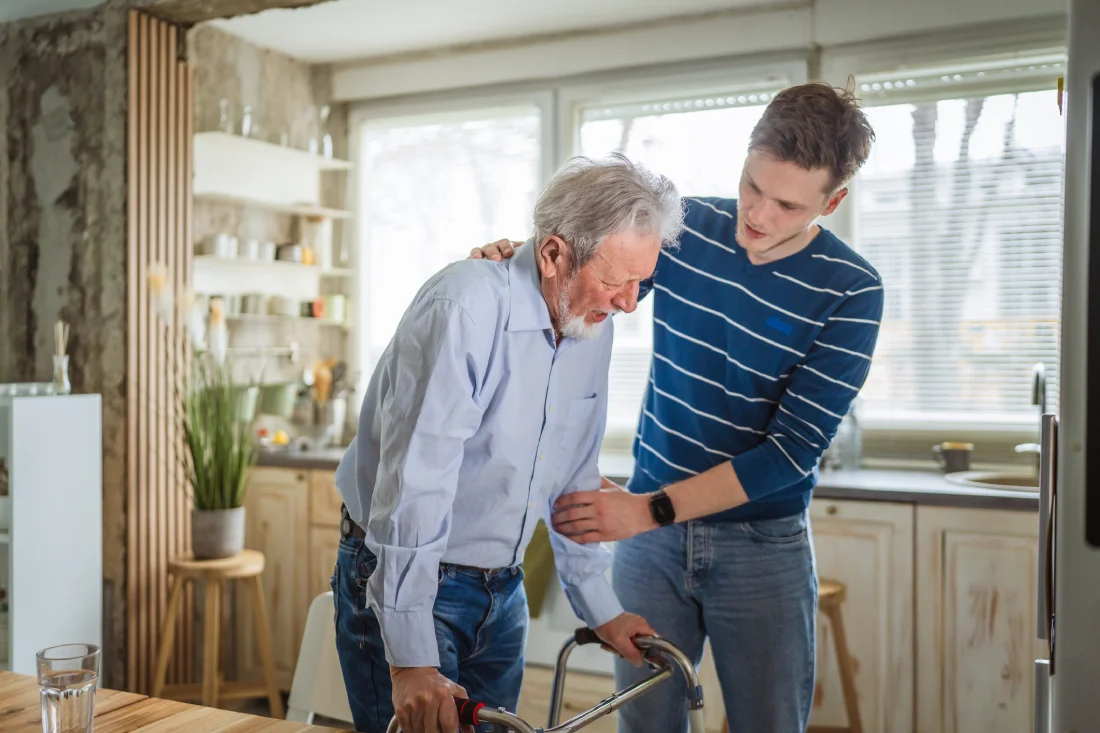
Falls are among the most serious safety risks for older adults. More than one fall in a twelve-month period, or any fall resulting in injury, is a clinically significant signal. A parent who moves with visible uncertainty around their home may be in an environment that can no longer adequately support them.
The National Institute on Aging notes that falls are one of the leading causes of injury-related hospitalizations and loss of independence among older adults.3
Noticeable Memory Loss
Forgetting a word or misplacing something is ordinary aging. Forgetting entire conversations from yesterday, not recognizing familiar people, or becoming confused about what year it is, are not. Memory changes that consistently affect daily safety warrant medical attention.
Medication Mistakes
Missed doses, double doses, and confusion about which medication to take when are common and carry real health consequences. If your parent’s medication routine isn’t being managed correctly, professional oversight may be genuinely lifesaving.
Missed Doctor Appointments
Getting to a physician requires transportation, memory, and organizational capacity. When any of those falter, important health monitoring stops. In Arizona’s climate, where dehydration, heat-related illness, and sun exposure can create urgent medical needs, consistent physician oversight matters even more.
Poor Personal Hygiene
A parent who was always careful about their appearance showing signs of poor hygiene isn’t being negligent. It’s usually a sign that personal care has become physically or cognitively overwhelming. What looks like a choice is often a signal.
Unexplained Weight Loss
Significant or rapid weight loss without a clear explanation can indicate depression, difficulty preparing food, forgetting to eat, or an underlying condition. Any notable unintended weight change in an older adult living alone deserves follow-up.
Expired or Spoiled Food
A refrigerator with food weeks past expiration, or nearly bare shelves that shouldn’t be, tells a real story about whether meals are being prepared and eaten consistently. Poor nutrition compounds other health vulnerabilities quickly.
Difficulty Managing Finances
Stacks of unopened mail, utility shutoff notices, or genuine confusion about accounts can indicate cognitive decline. Seniors living alone are also at elevated risk of financial exploitation when judgment becomes compromised.
Unsafe Driving Behaviors
New dents, recent traffic violations, getting lost on familiar Tucson roads, or a parent who seems visibly anxious behind the wheel are all meaningful warning signs. In a city where driving feels essential to independence, this conversation is difficult. But the safety stakes are real.
Trouble Housekeeping
A home that looks different, dishes undone, laundry left piling up, cleaning abandoned, reflects a real shift in daily capacity. When managing the household has become overwhelming, other daily tasks are almost always struggling too.
Social Isolation
A parent who rarely leaves home, has withdrawn from friends, or seems disconnected from the activities and relationships that once brought them joy may be experiencing depression, dangerous isolation, or both. Loneliness carries measurable effects on physical and cognitive health that compound over time.
Wandering or Getting Lost
Becoming disoriented while driving familiar roads, getting confused in familiar surroundings, or being found somewhere unexpected are serious warning signs, particularly where memory loss may be a factor. In Arizona’s heat, wandering carries urgent additional dangers.
Personality Changes
A parent who has become more suspicious, more easily agitated, more withdrawn, or simply different from who they’ve always been, may be experiencing neurological change, depression, or medication effects that warrant evaluation by a physician.
Difficulty Completing Daily Tasks
Making a meal, using the phone, managing the air conditioning. When tasks that were once routine begin taking much longer or resulting in mistakes, daily functioning has changed in ways that matter for safety.
Family Concerns Continue to Increase
When multiple family members are expressing worry, or when your own unease has been building steadily rather than subsiding, that collective observation is data worth taking seriously. Families who know a person well often notice meaningful changes before anyone else does.
Activities of Daily Living (ADLs): An Important Assessment Tool
Healthcare professionals assess daily functioning using a framework called Activities of Daily Living, or ADLs. These are the fundamental self-care tasks that independent living requires. Difficulty with several is a clinically meaningful signal that support is warranted.
The six core ADLs are:
Bathing: washing independently and safely.
Dressing: choosing and putting on appropriate clothing without assistance.
Eating: feeding oneself at mealtimes.
Toileting: using the bathroom independently and safely.
Mobility: moving safely through the home without falling.
Grooming: managing daily personal care tasks.
Quick ADL Checklist:
- Is your parent bathing safely and independently?
- Are they selecting and putting on appropriate clothing each day?
- Are they preparing and eating regular meals?
- Are they managing toileting without accidents or assistance?
- Can they move safely around the home without falling?
- Are they maintaining basic daily grooming?
Difficulty with two or more ADLs is generally considered a strong indicator that additional support should be evaluated.
Questions Families Should Ask
- Is my parent safe at night, alone, with no one nearby if something happens?
- Can they prepare meals consistently and safely in Arizona’s summer heat?
- Are medications being taken correctly and on schedule?
- Have they fallen in the past twelve months?
- Are family concerns increasing rather than easing over time?
What If a Parent Refuses Help?
Resistance is very common, and it almost always comes from fear rather than stubbornness. Fear of losing independence. Fear of what needing help might mean. Fear of leaving the home that holds a lifetime of memories.
Starting the conversation early, before a crisis, gives families more time and more options. Involving a trusted physician can shift the dynamic. Focusing on what the change makes possible, rather than on what it asks someone to give up, tends to open more doors than a direct confrontation about a move.
When Is Assisted Living the Right Next Step?
Assisted living is the right next step when living alone has become less safe, less fulfilling, or more isolating than the alternatives. The families who feel best about this transition are almost always those who made it thoughtfully, before a crisis forced the decision.
The best assisted living communities don’t take things away from residents. They give things back: a daily rhythm that has purpose, fresh food, genuine social connection, safety, and the chance for something new every single day. That’s what we call adventure. And at Saguaro Ranch, it’s not a metaphor.
How Saguaro Ranch Supports Seniors Who Need Additional Assistance
Saguaro Ranch Luxury Assisted Living sits at the foot of the Tortolita Mountains, wrapped in the vivid beauty of the Sonoran Desert. Residents tend their own raised garden beds, walk beneath open desert sky, engage with a daily calendar that includes yoga, Zumba, live music, Timeslips, creative arts, and animal visits, and live in a home where the landscape itself becomes part of the experience.
We were built on a simple and powerful belief: moving into assisted living should not mean giving up on life. At the Ranch, you’re family. Personalized care plans, consistent care partners who genuinely know your loved one, and a daily life that still feels full and adventurous. If you’d like to see the Ranch or talk through what your parent might need, we’d love to hear from you.
Ready to Explore Your Options?
The team at Saguaro Ranch is here to answer your questions and help your family understand what care and community can look like at the Ranch. Reach out or schedule a visit whenever you’re ready. There’s no pressure, just a conversation.
Frequently Asked Questions
Several daily indicators help families determine whether a parent is still safe living alone.
The clearest signals are whether daily tasks are being completed safely, whether falls or near-falls have occurred, whether medications are managed correctly, and whether your parent would know how to respond in an emergency. If you’re uncertain, a conversation with their physician and a careful look at their daily routine is a good starting point.
Safety, including falls, medication errors, and wandering, is the most critical warning sign an elderly parent needs help.
Safety is the most critical factor. Repeated falls, medication errors, wandering or getting lost, and an inability to respond in emergencies are the signs requiring the most urgent attention. When safety is genuinely at risk, a change in support is almost always warranted.
Home care can delay assisted living for seniors with limited, specific support needs.
Home care can bridge the gap for seniors with limited, specific support needs. When needs become more complex, when cognitive changes require consistent daily oversight, or when isolation becomes a serious concern, assisted living often becomes the safer and more supportive option.
Activities of Daily Living (ADLs) are the six fundamental self-care tasks required for independent living.
Activities of Daily Living are the fundamental self-care tasks required for independent living: bathing, dressing, eating, toileting, mobility, and grooming. Healthcare professionals use ADL assessment to evaluate how much daily support a person needs to function safely.
A parent who refuses assisted living can still be reached through early, respectful conversations.
Resistance is common and usually comes from fear. Starting the conversation before a crisis creates urgency, and involving a trusted physician, can help shift the dynamic. Focusing on what the change makes possible, rather than what it requires giving up, tends to be more effective.
Memory care becomes appropriate when cognitive decline requires specialized, consistent supervision beyond what standard assisted living provides.
Memory care becomes appropriate when cognitive decline requires specialized, consistent supervision. Signs include significant wandering, major confusion about time and place, inability to manage daily tasks safely, or behaviors that standard assisted living isn’t equipped to support.
Starting the assisted living conversation from curiosity rather than urgency tends to work best.
Starting from curiosity rather than urgency tends to work best. Framing the conversation around safety and quality of life, rather than around a specific decision, gives your parent room to participate rather than resist. Visiting communities together and keeping the tone calm and collaborative all help.
Whether someone with dementia can safely live alone depends on the severity of their symptoms.
It depends on the severity of symptoms. Early-stage dementia may allow some people to remain at home with support, but increasing confusion, wandering, medication errors, or safety concerns often make additional supervision necessary.
Home care can work well for seniors who need limited assistance, while assisted living is often the better fit once daily support needs grow.
Home care may work well for seniors who need limited assistance with specific tasks. Assisted living often becomes the better option when support is needed throughout the day, safety concerns are increasing, or social isolation is affecting quality of life.
This content is provided for educational purposes only and is not a substitute for professional medical, legal, or financial advice. Every person’s care needs are unique. Families are encouraged to consult with qualified healthcare providers and licensed senior care professionals when making decisions about assisted living or memory care.
Sources
[1] Arizona Department of Health Services.
Bureau of Residential Facilities Licensing.
https://www.azdhs.gov/licensing/residential-facilities/index.php
Arizona Department of Health Services.
Accessed June 2026.
[2] National Council on Aging.
“Falls Prevention for Older Adults.”
https://www.ncoa.org/older-adults/health/prevention/falls-prevention/
National Institute on Aging. National Institutes of Health.
Accessed June 2026.
[3] National Council on Aging.
“Falls and Fractures in Older Adults: Causes and Prevention.”
https://www.nia.nih.gov/health/falls-and-falls-prevention/falls-and-fractures-older-adults-causes-and-prevention
National Institute on Aging. National Institutes of Health.
Accessed June 2026.
{
“@context”: “https://schema.org”,
“@graph”: [
{
“@type”: “Article”,
“@id”: “https://www.saguaroranchliving.com/signs-an-elderly-parent-can-no-longer-live-alone/#article”,
“headline”: “15 Signs an Elderly Parent Can No Longer Live Alone”,
“description”: “Wondering if a parent can still live alone safely? Learn 15 warning signs, key safety concerns, and when additional support may be needed.”,
“author”: {
“@id”: “https://www.saguaroranchliving.com/#careteam”
},
“reviewedBy”: {
“@id”: “https://www.saguaroranchliving.com/#careteam”
},
“publisher”: {
“@id”: “https://www.saguaroranchliving.com/#organization”
},
“mainEntityOfPage”: {
“@type”: “WebPage”,
“@id”: “https://www.saguaroranchliving.com/signs-an-elderly-parent-can-no-longer-live-alone/”
},
“about”: [
{ “@type”: “Thing”, “name”: “Assisted Living” },
{ “@type”: “Thing”, “name”: “Memory Care” },
{ “@type”: “Thing”, “name”: “Senior Care” },
{ “@type”: “Thing”, “name”: “Aging” },
{ “@type”: “Thing”, “name”: “Activities of Daily Living” },
{ “@type”: “Thing”, “name”: “Falls Prevention” },
{ “@type”: “Thing”, “name”: “Senior Safety” },
{ “@type”: “Thing”, “name”: “Aging in Place” }
]
},
{
“@type”: “FAQPage”,
“@id”: “https://www.saguaroranchliving.com/signs-an-elderly-parent-can-no-longer-live-alone/#faq”,
“mainEntity”: [
{
“@type”: “Question”,
“name”: “How can families determine whether a parent is still safe living alone?”,
“acceptedAnswer”: {
“@type”: “Answer”,
“text”: “The clearest signals are whether daily tasks are being completed safely, whether falls have occurred, whether medications are managed correctly, and whether a parent would know how to respond in an emergency.”
}
},
{
“@type”: “Question”,
“name”: “What is the most critical warning sign an elderly parent needs help?”,
“acceptedAnswer”: {
“@type”: “Answer”,
“text”: “Safety is the most critical factor. Repeated falls, medication errors, wandering, getting lost, and an inability to respond in emergencies require prompt attention.”
}
},
{
“@type”: “Question”,
“name”: “Can home care delay assisted living?”,
“acceptedAnswer”: {
“@type”: “Answer”,
“text”: “Home care can bridge the gap for seniors with limited support needs, but assisted living often becomes a better option when care needs become more complex.”
}
},
{
“@type”: “Question”,
“name”: “What are Activities of Daily Living?”,
“acceptedAnswer”: {
“@type”: “Answer”,
“text”: “Activities of Daily Living include bathing, dressing, eating, toileting, mobility, and grooming, which are the basic self-care activities required for independent living.”
}
},
{
“@type”: “Question”,
“name”: “Can a parent who refuses assisted living still be helped?”,
“acceptedAnswer”: {
“@type”: “Answer”,
“text”: “Starting conversations early, involving a trusted physician, and focusing on safety and quality of life can help families navigate resistance to assisted living.”
}
},
{
“@type”: “Question”,
“name”: “When does memory care become appropriate?”,
“acceptedAnswer”: {
“@type”: “Answer”,
“text”: “Memory care becomes appropriate when cognitive decline requires specialized supervision, including significant wandering, major confusion, or unsafe daily functioning.”
}
},
{
“@type”: “Question”,
“name”: “How should families start the assisted living conversation?”,
“acceptedAnswer”: {
“@type”: “Answer”,
“text”: “Beginning the conversation from a place of curiosity and concern for safety often helps older adults participate in the decision-making process.”
}
},
{
“@type”: “Question”,
“name”: “Can someone with dementia safely live alone?”,
“acceptedAnswer”: {
“@type”: “Answer”,
“text”: “Some people with very early-stage dementia may remain at home with support, but increasing confusion, wandering, medication errors, and safety concerns often require additional supervision.”
}
},
{
“@type”: “Question”,
“name”: “When is assisted living a better fit than home care?”,
“acceptedAnswer”: {
“@type”: “Answer”,
“text”: “Assisted living often becomes the better option when support is needed throughout the day, safety concerns are increasing, or social isolation is affecting quality of life.”
}
}
]
},
{
“@type”: “Organization”,
“@id”: “https://www.saguaroranchliving.com/#careteam”,
“name”: “Saguaro Ranch Luxury Assisted Living Care Team”
},
{
“@type”: “Organization”,
“@id”: “https://www.saguaroranchliving.com/#organization”,
“name”: “Saguaro Ranch Luxury Assisted Living”,
“url”: “https://www.saguaroranchliving.com”
},
{
“@type”: “AssistedLiving”,
“@id”: “https://www.saguaroranchliving.com/#assistedliving”,
“name”: “Saguaro Ranch Luxury Assisted Living”,
“url”: “https://www.saguaroranchliving.com”,
“address”: {
“@type”: “PostalAddress”,
“addressLocality”: “Tucson”,
“addressRegion”: “AZ”,
“addressCountry”: “US”
}
}
]
}